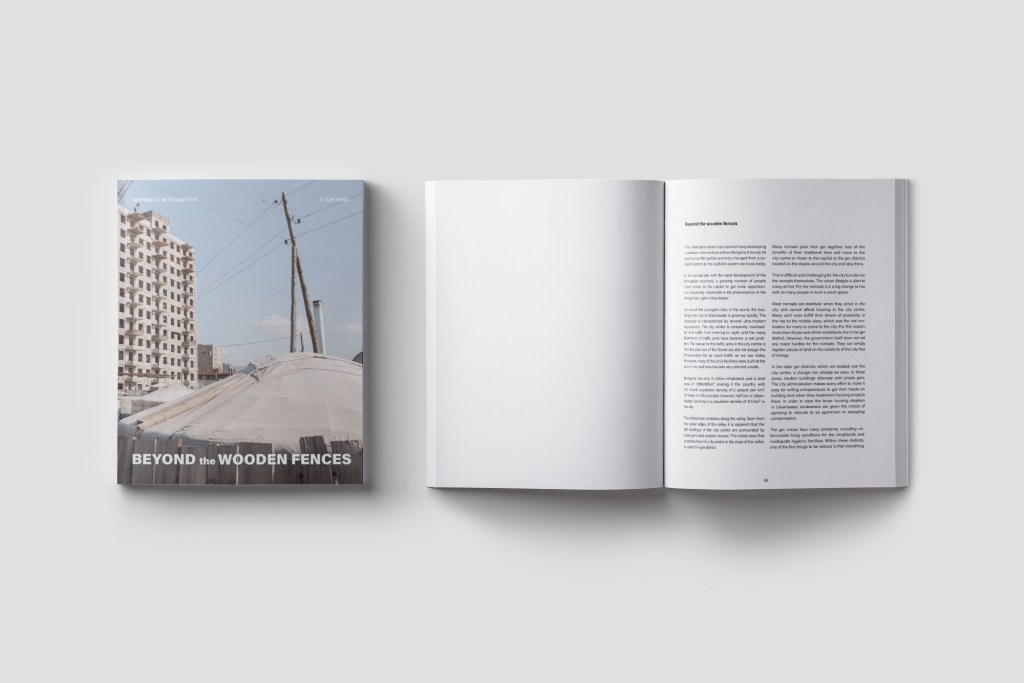

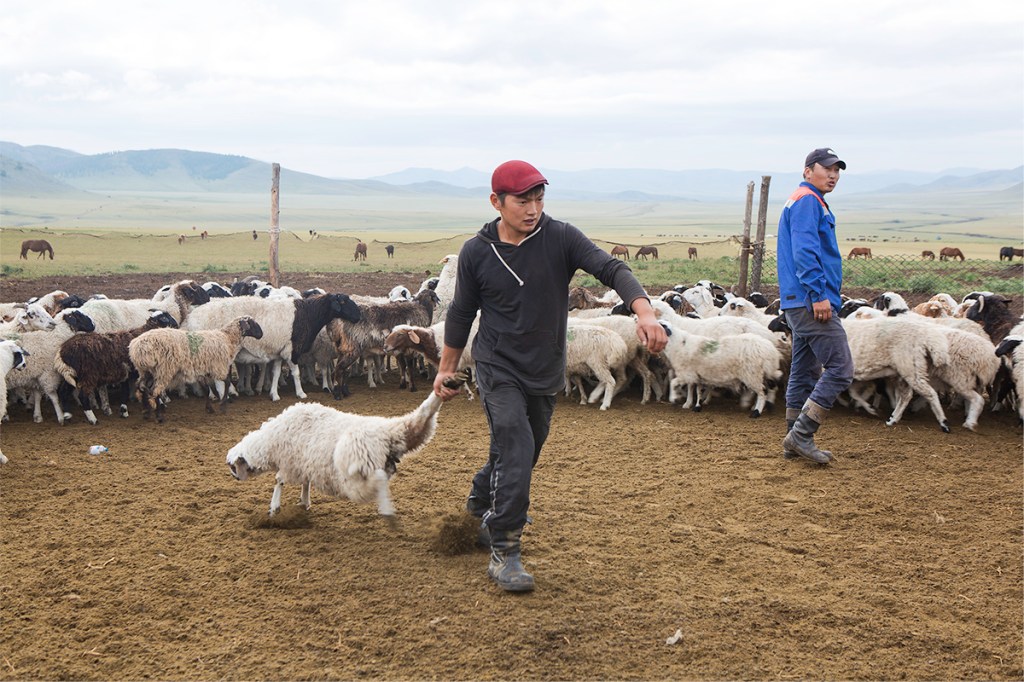

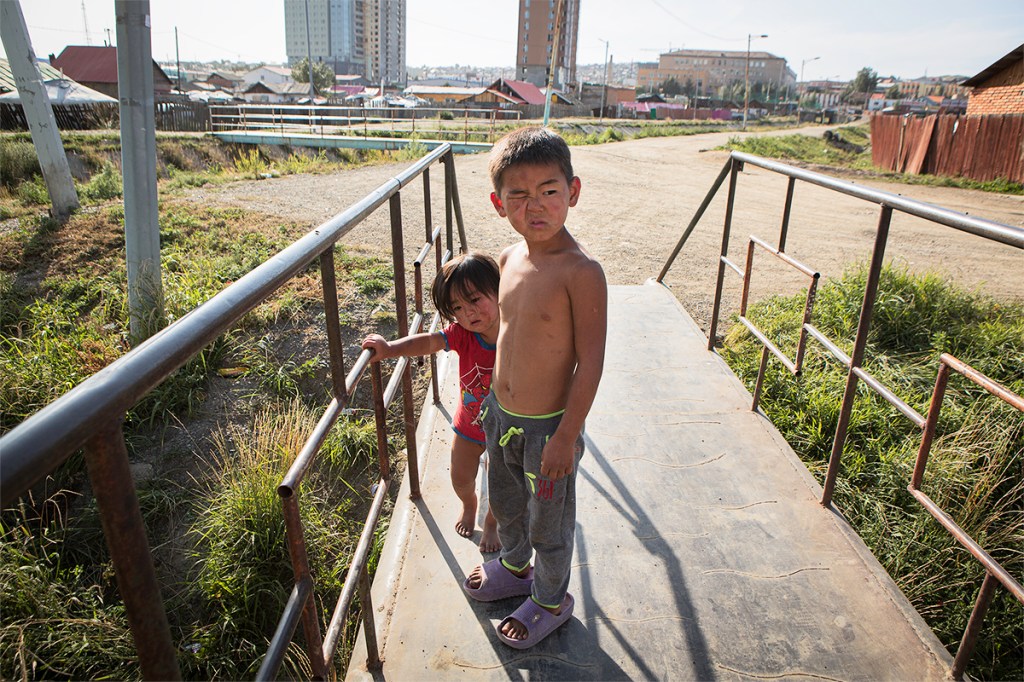
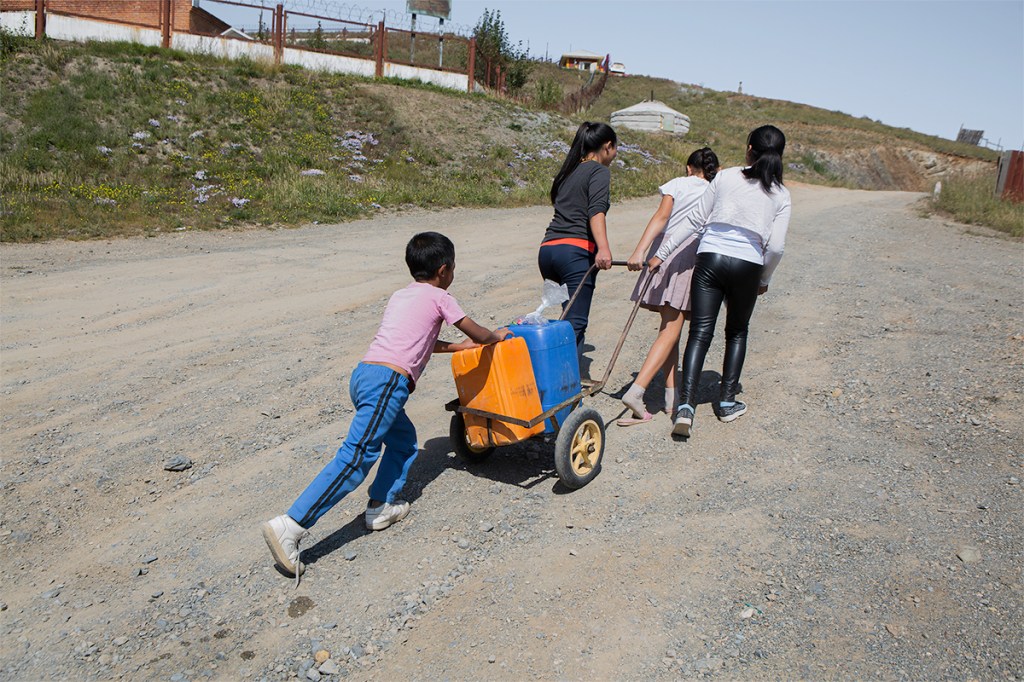
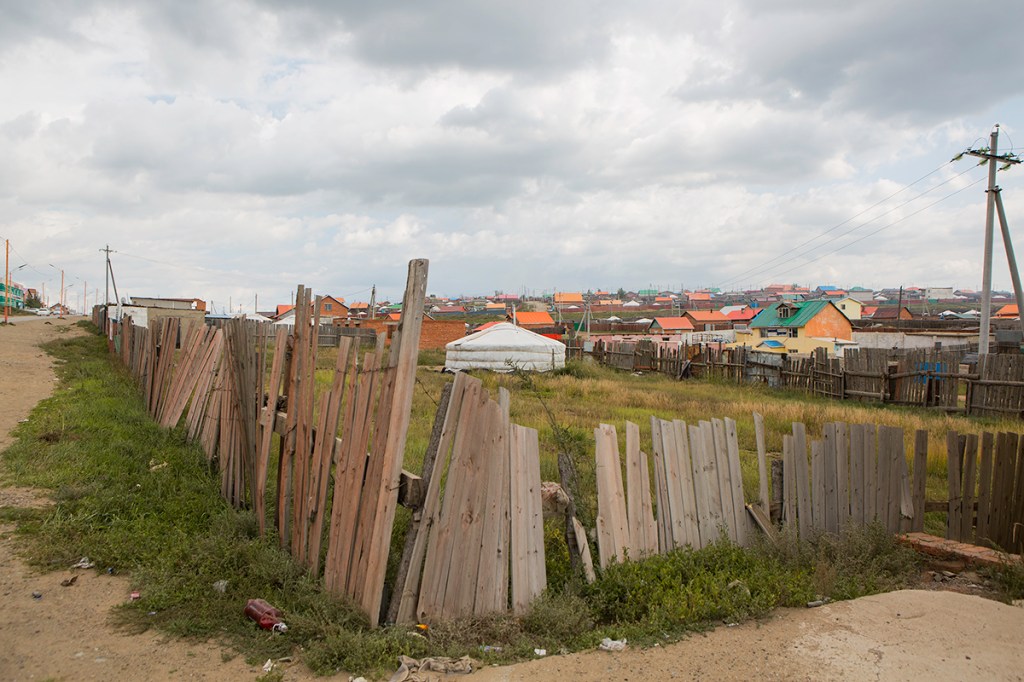
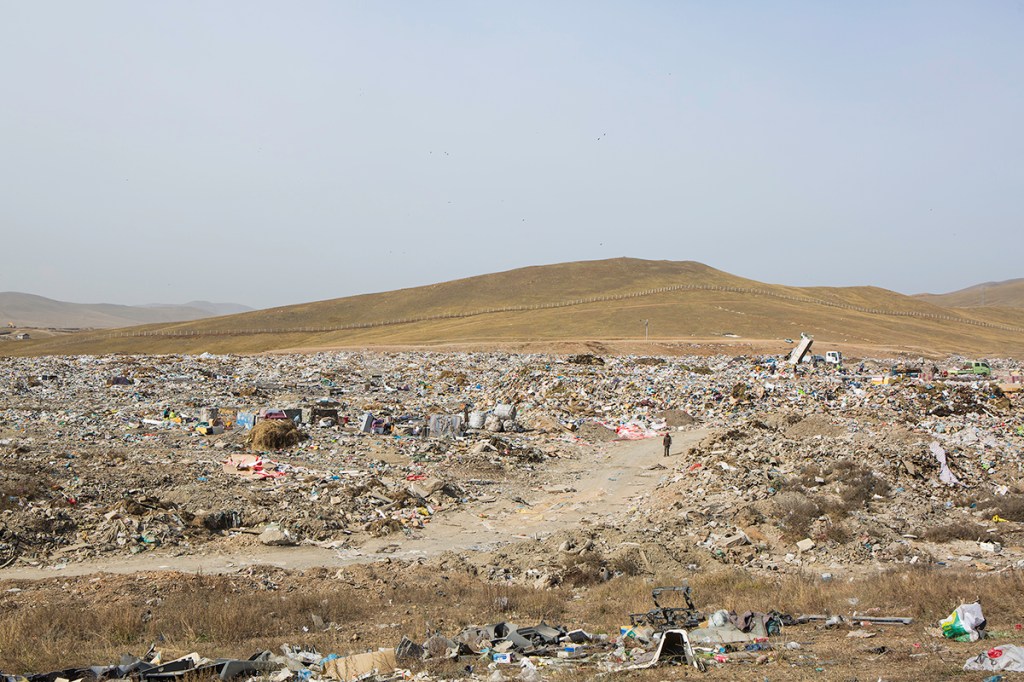
| Beyond the wooden fences | is Mongolia in transition, especially the changes in the lifestyle of the Mongolian nomads and urban development.
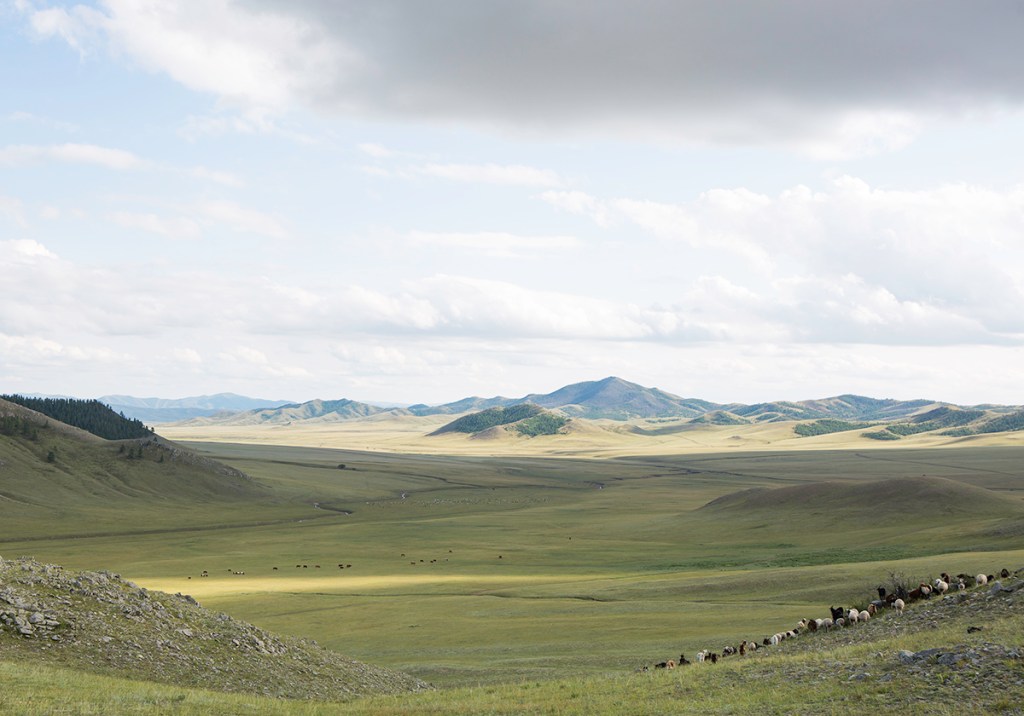
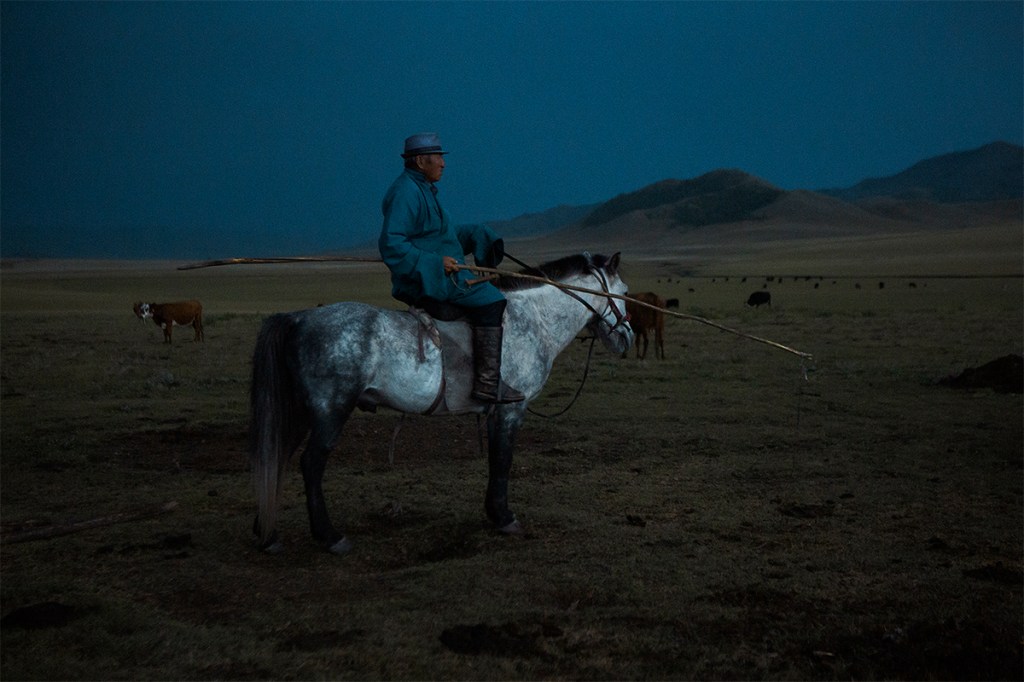
It is on the planes of this green steppe with its characteristic blue sky where the unique Mongolian grassland culture developed. It is in these grasslands that the nomads grow up. The gers, traditional tents with which the Mongolians move through the steppe, are an important symbol of the nomadic family and give them a sense of belonging. The livestock is, apart from the ger, the only property in the nomadic culture.
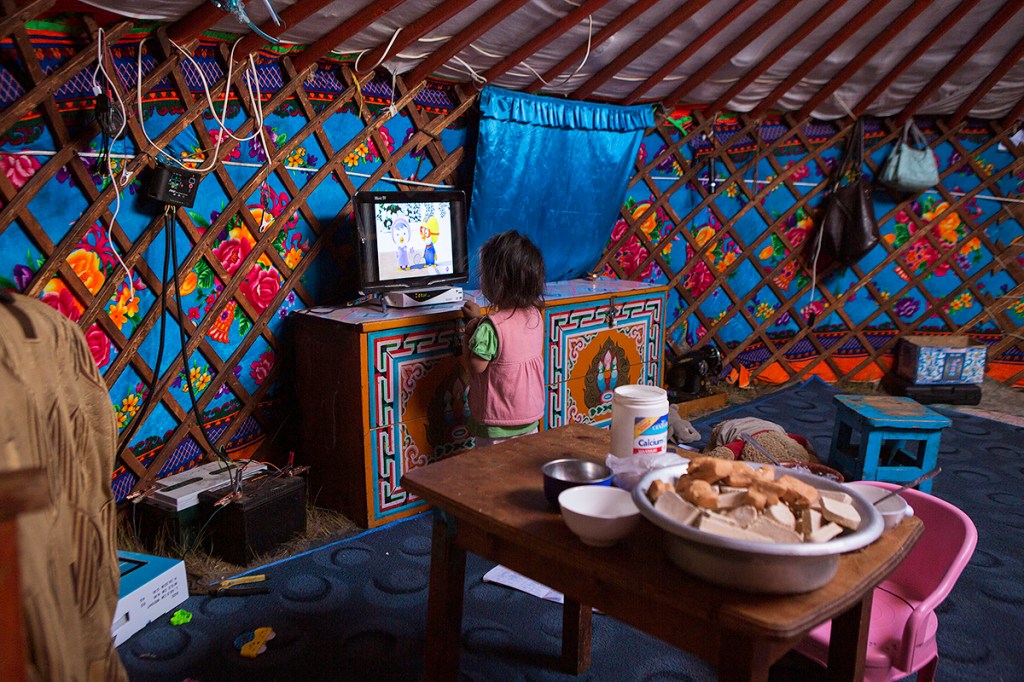
The development of society and the improvement of technological and economic conditions are changing these unique patterns of grassland culture. The nomads who live in the steppe today combine old traditions with new means. For example, many modern conveniences have been integrated into the ger, bringing the nomadic lifestyle ever closer to modernity.
In the development of urbanization and economic growth, more and more Mongolians, especially the younger generation, have begun to embrace the urban lifestyle and many believe that this is the best way to live a better life in the future. Many nomads have decided to leave the steppe where their families have lived for several generations, pack their ger, sell their animals and move to the capital Ulaanbaatar.
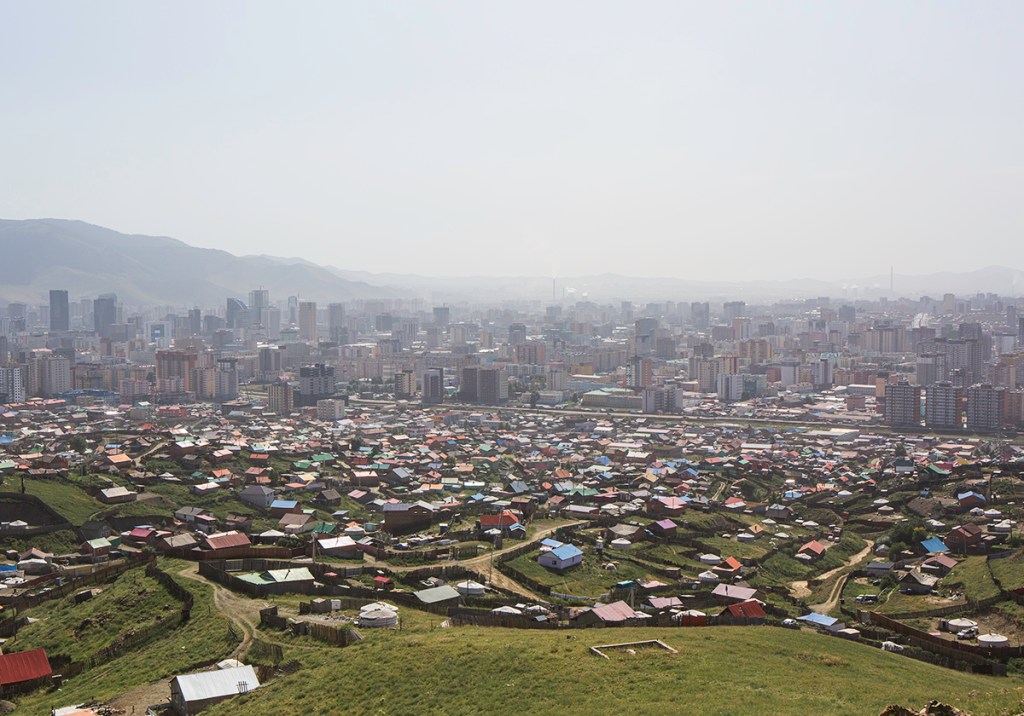
Ulaanbaatar is the political, economic, cultural, transportation, industrial and technological center of Mongolia. With the urban trend and the diversification of development, the surrounding communities have moved closer to the city and the population has grown massively. Ulaanbaatar has almost tripled since 1990 and currently has more than 1.5 million inhabitants in the capital.
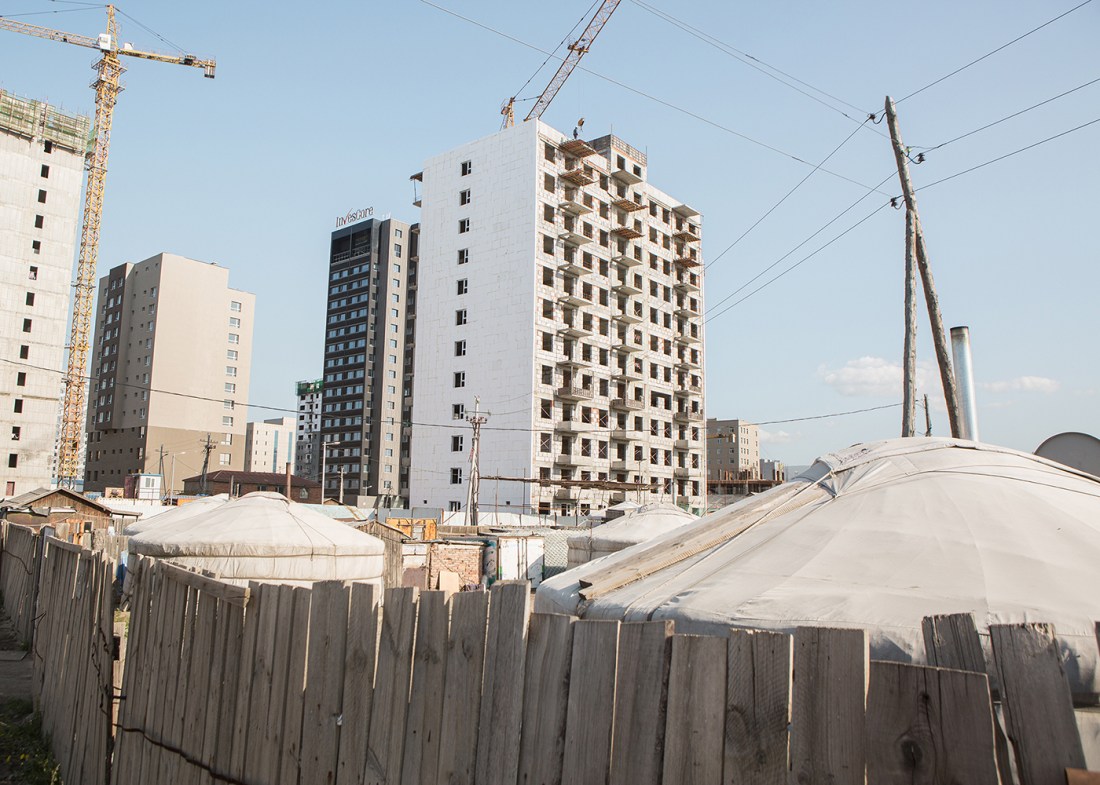
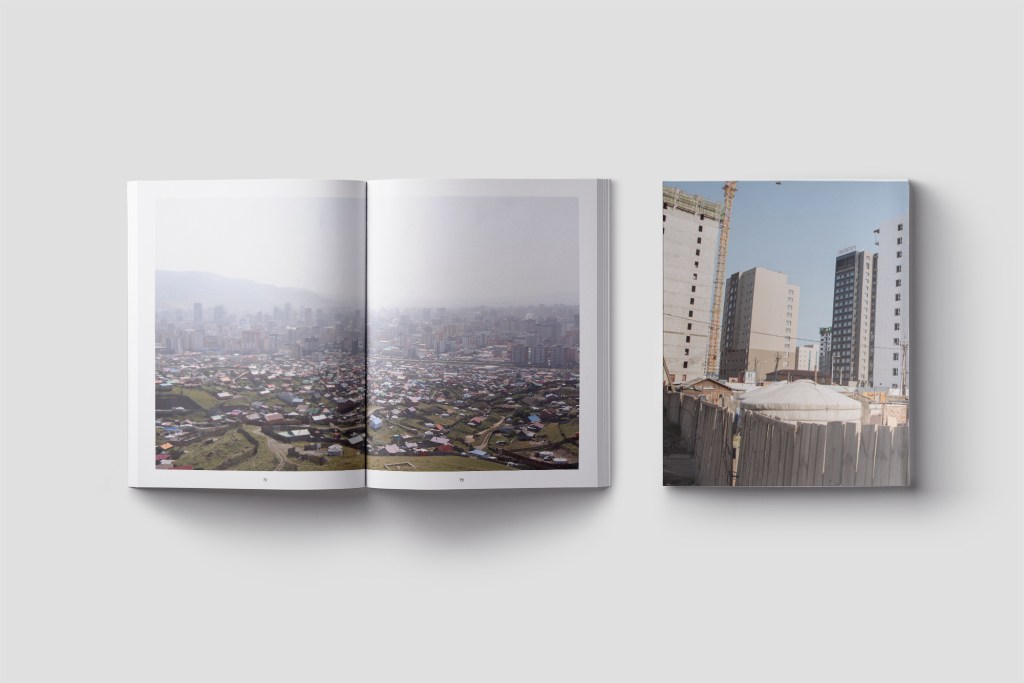
This situation of rapid population growth has also brought with it some urban problems. For example, many Mongolians who migrated intensively to the city led to informal settlements, also known as ger districts. About 60 percent of the population live in this area. The whole city is surrounded by this dense ger district and is constantly growing. In addition, the inner city is currently confronted with high traffic congestion and a lack of basic housing for the residents as well as environmental hygiene problems.
The wooden fence that once stood on the meadow and confined the livestock has now taken on a new meaning in the ger district. The wooden fences have become a characteristic part of the ger districts, but they are the encirclement of the people who have moved to the city. The wooden fences contain their own boundaries. Behind the fences lies the expectation of a better future for the Mongolian family.

 Zi Jun Yong